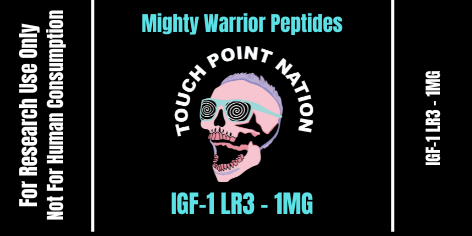
IGF-1 LR3 is a modified recombinant analog of human insulin-like growth factor-1 designed with an extended N-terminal sequence and an arginine substitution at position three. These structural changes significantly reduce IGF binding protein interactions, providing researchers with a more sustained and receptor-available IGF-1 signal compared to native IGF-1.
In laboratory studies, IGF-1 LR3 is commonly used to explore mitogenic pathways, cellular proliferation, and survival-related signal transduction. The peptide activates the IGF-1 receptor, triggering downstream cascades such as PI3K–Akt–mTOR and the Ras–Raf–MEK–ERK pathway.
Researchers frequently use IGF-1 LR3 in muscle and connective-tissue models to study myoblast differentiation, protein-synthesis signaling, and fibroblast behavior. Its ability to enhance cell fusion and growth-factor signaling makes it a dependable tool for investigating tissue-growth dynamics under controlled conditions.
IGF-1 LR3 is also utilized in neuronal and glial studies to examine cell survival, axonal extension, and protective responses to oxidative or metabolic stress. These applications highlight its versatility across multiple research fields involving cellular resilience and regenerative signaling.
Because IGF-1 LR3 exhibits stronger and longer-lasting pathway activation than native IGF-1, it is especially useful for amplifying IGF-1–related responses in vitro. However, this same potency requires careful interpretation in experiments involving oncogenic or highly proliferative cell lines.
The peptide is not physiologically identical to endogenous IGF-1, and its amplified signaling profile must be accounted for when comparing results to natural IGF-1 biology. Findings should be contextualized within the regulatory influence of IGF binding proteins and receptor distribution across cell types.
IGF-1 LR3 is not approved for human or veterinary use and is supplied strictly as a research-grade material. It is intended for controlled scientific studies involving IGF-1 receptor biology, proliferation assays, metabolic signaling exploration, and related mechanistic research. For research use only, not for human or veterinary use.