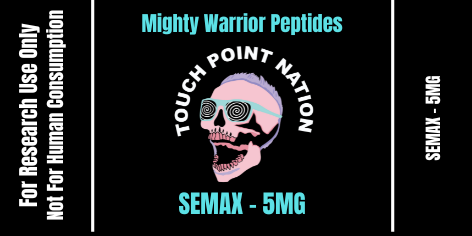
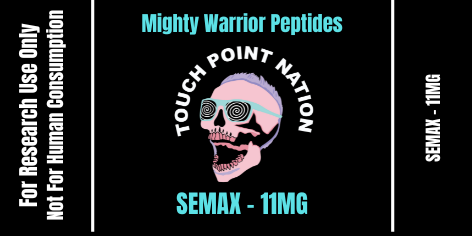
Semax is a synthetic heptapeptide engineered from the ACTH 4–10 fragment and designed to retain central nervous system activity without stimulating cortisol or other steroidogenic pathways. Its defined sequence, Met–Glu–His–Phe–Pro–Gly–Pro, reflects a regulatory peptide architecture optimized for metabolic stability.
In research models, Semax is frequently studied for its effects on neurotrophic pathways, particularly BDNF-related signaling. Studies in rodents report increased BDNF expression and enhanced downstream TrkB-associated activity in regions such as the hippocampus and cortex.
Semax is also examined for its ability to modulate neurotransmitter systems including glutamatergic, dopaminergic, serotonergic, and cholinergic networks. These modulatory effects support its use in research exploring synaptic function, learning behavior, and stress adaptation.
A significant body of experimental work evaluates Semax in ischemia and oxidative-stress injury models. In these contexts, Semax has been associated with reduced neuronal damage, improved mitochondrial activity, and attenuation of excitotoxic or inflammatory cascades.
Transcriptomic studies highlight Semax’s ability to influence gene expression programs linked to neuronal survival, metabolic regulation, and synaptic communication. These findings align Semax with the broader class of short regulatory peptides proposed to exert epigenetic-like effects.
Behavioral research models have reported improvements in learning, memory acquisition, and task performance following Semax exposure. Additional experiments show increased resistance to cognitive decline under stress, although such findings remain preclinical.
Semax has also been investigated for neuroimmune interactions, with studies describing altered cytokine and chemokine expression in response to injury or inflammation. This positions Semax as a regulatory peptide influencing both neural and immune domains.
While extensively studied in Russian and Eastern European research programs, Semax is not an FDA-approved therapeutic and remains a laboratory research tool. For research use only, not for human or veterinary use.