
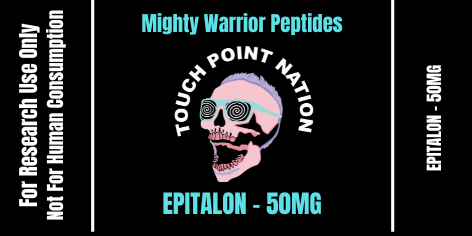
Epitalon is a synthetic tetrapeptide composed of the sequence Ala–Glu–Asp–Gly (AEDG), originally identified as a purified active fragment of pineal polypeptide extracts. Its defined molecular structure makes it a consistent research tool for studies involving aging biology and cellular regulation.
In experimental systems, Epitalon is frequently investigated for its effects on telomere biology, including reported influences on telomerase expression and telomere-length dynamics in certain cultured human cells. These findings have prompted broad scientific interest in its potential impact on replicative aging models and senescence-associated pathways.
Researchers also examine Epitalon in the context of transcriptional and epigenetic signaling, where it has been linked to changes in gene networks associated with nucleic acid processes, apoptosis, and cell-cycle regulation. Such effects appear to be model-dependent and are typically assessed through genomic and proteomic readouts.
Additional studies explore Epitalon’s relationship to pineal physiology and circadian-related mechanisms, including reported changes in melatonin-linked biomarkers and clock-gene expression. These observations support its use in research on biological rhythm modulation and neuroendocrine signaling.
Epitalon has also appeared in experimental literature involving oxidative-stress responses and cellular-protection pathways. These investigations highlight its potential role in stress-adaptation models, although outcomes vary across different cell types and conditions.
Beyond telomere and circadian research, the peptide has been included in exploratory work involving tissue-model systems, including cell-repair and retinal studies. These lines of research remain at an early stage and are used to probe broader biological interactions.
Because Epitalon’s evidence base includes both legacy and modern studies with heterogeneous methodologies, researchers typically evaluate it as a mechanistic probe rather than a defined therapeutic agent. This ensures that findings remain anchored to experimental endpoints rather than clinical claims.
Epitalon is not FDA-approved and is not recognized as a drug, treatment, or supplement in any regulatory capacity. It is supplied solely for controlled laboratory investigation into cellular aging, gene-expression mechanisms, circadian biology, and related biochemical pathways. For research use only, not for human or veterinary use.